 Skip to content
Claude Code Saturday
AI BOUTIQUE EVENT · ZAGREB · 16 SEATS
One Saturday, 9 to 17. In the morning you bring one job that keeps coming back, in the afternoon a tool does it on your laptop.
The black window looks like something for programmers.
You write plain sentences in your own language. Nothing is learned by heart.
I know. That is why I say it up front: we spend the whole day in Claude Code, in the terminal. You type the same way you do in a chat, only without buttons and menus.
The app could work with your files too. The problem sits elsewhere. You open it to write a proposal and you end up in the settings: projects, connectors, one more model from a dropdown. The proposal still does not exist. You become your assistant’s assistant.
In the terminal there is no such lap. Your rules, the way you write and your real example are written down once, in your own folder. A month from now it still works, and you can hand that folder to a colleague and it works for them too.
What is built around the model so it can do the work for you is called a harness in the trade. It decides whether you get finished work or one more answer to copy and paste. In the terminal you reach it directly.
I have been running hands-on AI training since the beginning of 2024. For most people the fear of the black window passes within the first twenty minutes. After that the conversation is only about your work.
“It started from zero, literally: at the first session we installed everything together, so nobody was left behind. That was decisive for me, because my relationship with the terminal until then was roughly at the level of ‘a black window you do not touch’.”
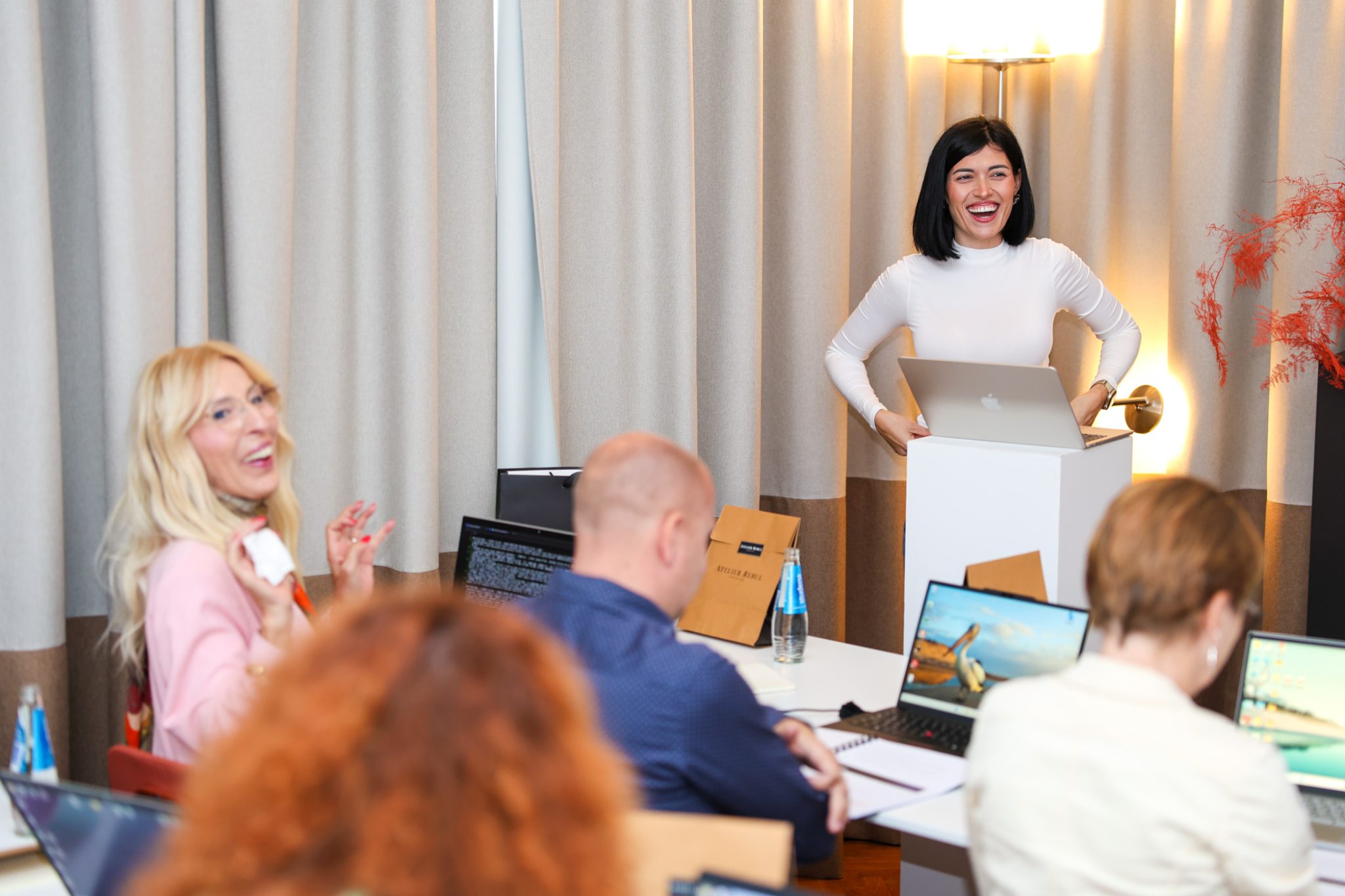
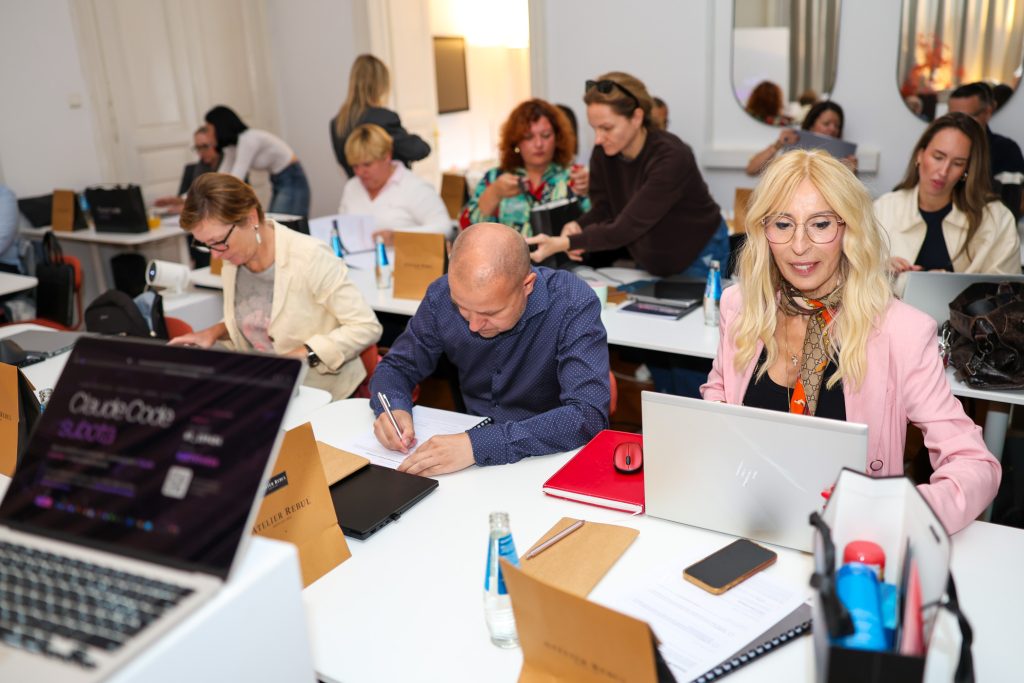
Two Saturdays. This is what they really looked like.
Photographed by Mario Poje, from the first coffee to the group photo.
In the room there were people from audit and accounting, organisational development, sales and a primary school. Prior experience ranged from zero to about three quarters. Everyone worked on their own job: Dubravka on a prototype of an app she intends to use in her daily work, Andrej on an app for an HR department that he is actually building.
“This was one of the rare workshops I left with a concrete, tangible result of my own work, and that despite the fact that my prior knowledge and experience with these tools was far closer to absolute zero than to any advanced level.”
 01
01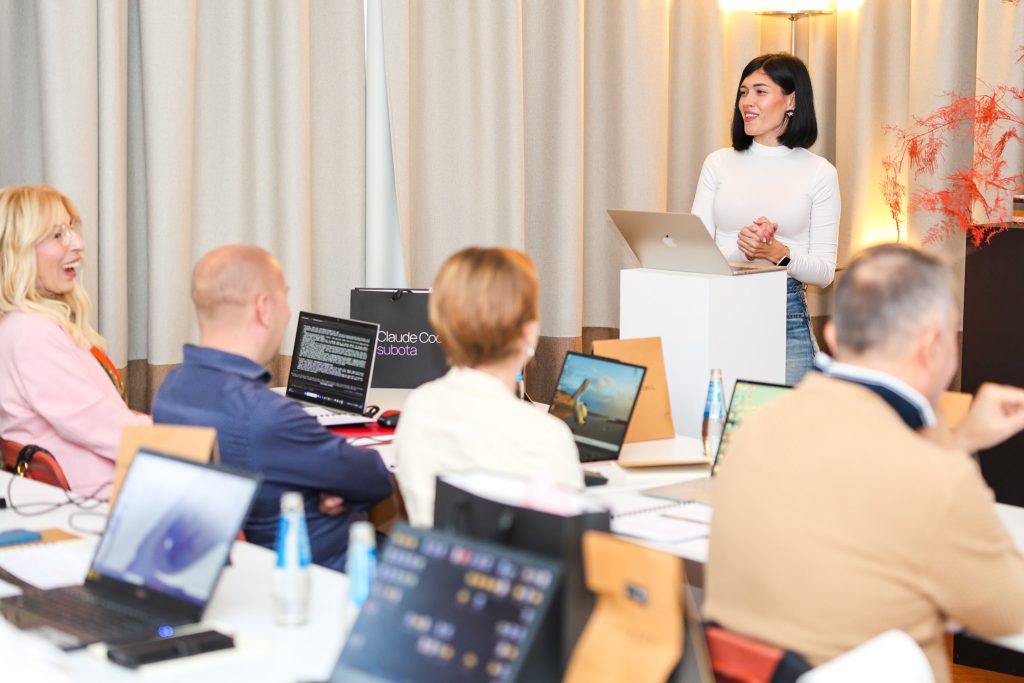 02
02 03
03 04
04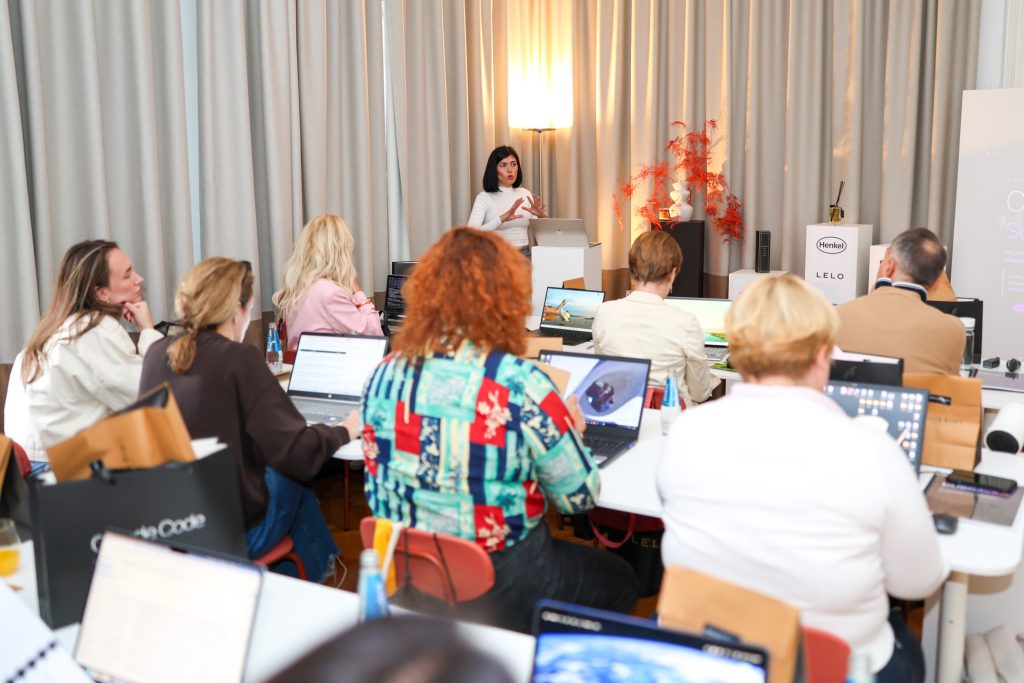 05
05


 13
13

 16
16 17
17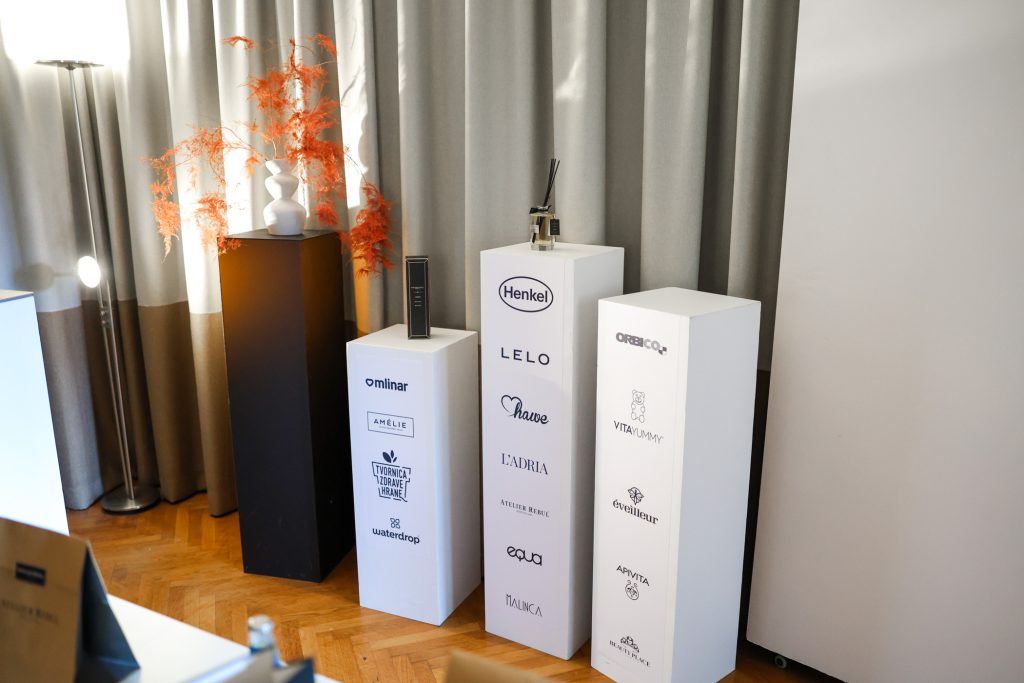 18
18 19
19All photos from 19 September are in Mario Poje’s gallery.
Five things from zero, in eight hours: a prototype of a system for running a company, an app for a dermatology practice, a tool that tracks sales and stock, a personal finance app and a system that analyses a website and suggests fixes. The group was full, all 16 seats. Bug.hr wrote about the first edition.
“When I saw the promise that we would have a finished product by 5 PM, I admit it sounded ambitious and a little unrealistic. Still, Claude Code Saturday delighted me.”


All photos from 13 June are in Mario Poje’s gallery.
Click a frame to enlarge
From 9 to 17, block by block.
Three days earlier, on Wednesday 9 December, we meet on Zoom and set everything up on your laptop. That is why on Saturday you have breakfast at 9 and are already working on your own thing at 9:45, instead of waiting for a download.
“…on the day of the workshop there was no time lost on technical problems, installations and setup, we could jump straight into what matters most.”
We install Claude Code together, step by step, on Mac or Windows. The group is split into four smaller slots, so everyone has time to sign in, run the first command and see it answer. If your laptop belongs to the company and is locked down for installs, we find that out then, not on Saturday morning. If the slot does not suit you, we agree on another one.

Patricija Topić
I take people from “I don’t get it” to “I can’t imagine working without this”. I don’t show up with slides. I sit next to you and we work until it runs.
More about me and the Institute →
You start from the job that bothers you most.
Most people don’t arrive with an idea, but with a feeling that they are losing time somewhere. That is enough. If you don’t have an idea, we pick one together. If you do have one, you build that. Three examples, so you can see the level:
“Everyone came with their own idea and that made the difference: instead of watching someone else’s demo, I worked on an app for an HR department that I am actually building.”
Invoices into a spreadsheet
Turns a pile of PDF invoices into a table with the date, supplier, amount and VAT.
How does it work?
You drop every invoice into one folder, the PDFs from your email and the pile you photographed with your phone. Claude Code goes through them one by one, pulls out the date, supplier, amount and VAT, and writes each one into its own row in an Excel sheet. We set it up so that a row it cannot read gets flagged with a note on what to check, rather than guessed at. On Monday morning you add the new invoices to the same folder, run the same command and the table for your accountant is done.
Draft replies
Writes the first draft of a reply to a client enquiry, in your words and on your terms.
How does it work?
First you gather twenty or so of your old replies, the ones that went well. Claude Code picks up from them how you write, which terms you state and where you draw the line on deadlines and prices. Then you paste in a new enquiry and get a draft you polish and send. A full inbox is then not a list of replies you write from scratch, it is a list of drafts you review.
Who hasn’t paid
Matches your bank statement against the invoices you issued and shows who hasn’t paid.
How does it work?
You download the bank statement and export the list of issued invoices, two files you would otherwise compare line by line. Claude Code matches them on amount and reference number, then splits them into three lists: paid, unpaid, and what it cannot match with certainty. For every unpaid invoice it also writes a reminder with the invoice number and the days overdue, ready to send. You open one list in the morning and know who to call before noon.
One price, the full day and everything around it.
“Fine food was served throughout the day, and the generous goodie bag was a lovely closing surprise.”
“You rarely meet a person who can explain complex things so simply that even someone with no connection to programming understands them.”
Partners of our Saturday





Counting down to 12 December.
The same price for everyone, down to the last seat.
550 euros covers the whole day in a group of at most sixteen people, help at your table, the Zoom session before Saturday, breakfast and lunch, a handbook tailored to your work, an hour one on one and a month of email support. You leave Hub7 at five in the afternoon with a laptop running something that did not exist that morning, and on Monday you simply carry on using it.
Entrio adds its own 4 € fee on top, so at the checkout it is 554 €.
“One of the rare trainings you leave feeling you got far more than you paid for.”
You risk one morning, not 550 euros.
The first block is your trial. If by the break at 11:05 you decide this is not for you, you close the laptop and we refund everything you paid, including Entrio's fee. No questions asked.